Happy Thanksgiving?

“Enter into His gates with thanksgiving, and into His courts with praise: be thankful unto Him, and bless His name.”

          -Psalm 100:4

I’m not against Black Friday. I wasn’t a big proponent of many local stores beginning their sales on Thanksgiving Day, but I did nonetheless serve as chauffeur and cart pusher in-chief to those in my family who had their eyes on some special bargain. Every year I diligently fulfill my assignment, waiting near some tall, brown pallet of merchandise to (hopefully) help a loved one snatch a deal without losing life or limb in the process. Even if you’re able to escape without injury, however, dealing with disgruntled employees and angry shoppers during the holiday season is inevitable.

But even though I’m not against Black Friday per se, I’m certainly not a fan. Just as the Christmas season seems to be more about lights and gifts than the birth of our Savior, it seems Thanksgiving, a day which once upon a time was about gratitude and contentment, is now the greediest day of the year. People were diving over other shoppers, pushing, shoving and yelling – all so they could save $20 on luxury. I understand the need to save money, but is 50% off really worth giving someone a black eye on Thanksgiving? Even though the scene was no less violent and chaotic than I’ve seen in years past, something about the fact that these people weren’t even waiting until the turkey had settled in their stomachs really put a knot in mine.

“And let the peace of God rule in your hearts, to the which also ye are called in one body; and be ye thankful.”

          -Colossians 3:15

Even if you’re someone who stays a mile away from the nearest department store when Thanksgiving rolls around, what’s the first thing you think of when the holiday is mentioned? Traveling to see family you really don’t like? Eating lots of food? Having a few days off work? It seems that very few people have been able to preserve much of what Thanksgiving was originally intended to be: a day to express our gratitude to the Giver of all good things (James 1:17).

So, no, I’m not preaching against Black Friday. As I’ve pointed out, I’ve generally participated in it to some extent myself (although I vowed after Thursday’s events to avoid it completely next year). My conviction is not that we should wait one more week to do our Christmas shopping; it’s that we cannot fail to give God thanks and expect His blessings to continue. So will you join me in seizing today’s opportunity to express our thankfulness to God? In the words of the Psalmist, “it is a good thing to give thanks unto the Lord” (Psalm 92:1).


Magnify the Lord!

Luke 1:42

As a Christian, at the very core of your spiritual walk should be the faith that God has ransomed you from sin by grace through faith in His blood (Ephesians 2:8). You understand that, even though your sin had alienated you from the fellowship of the Lord, the mighty love of God was strong enough to break the yoke of sin from your back and set you free from its bondage (Colossians 1:21). It’s likely you are aware of many answered prayers and see countless evidences every day that God is still on the throne. You are blessed more than anyone could deserve – and you know it.

I won’t say that failure to recognize one’s blessings is never a problem, but generally it is not. On Thanksgiving none of us scratch our head and say, “Hmm…what good thing has God done for me this year?” We’re usually good at spotting the fingerprints of God in our lives; the problem is that we’ve become so accustomed to luxury that we treat God’s goodness like electric lights or running water: most of us have never lived without it, so actually taking time to magnify Him for it often seems unnecessary.

But what does it really mean to magnify God anyway? Does saying a brief, silent prayer of thanks count? I suppose to some extent it does, but truly magnifying the Lord consists of much more than a mere “thank you” is able to accomplish. Consider this excerpt from a sermon by John Piper:

“The word "magnify" can be used in two different senses. It can mean: make something appear greater than it is, as with a microscope or a magnifying glass.
Or it can mean: make something that may seem small or insignificant appear to be as great as it really is. This is what our great telescopes help us begin to do with the magnificent universe which once upon a time spilled over from the brim of God's glory. So there are two kinds of magnifying: microscope magnifying and telescope magnifying. The one makes a small thing look bigger than it is. The other makes a big thing begin to look as big as it really is.

When David says, "I will magnify God with thanksgiving," he does not mean: "I will make a small God look bigger than he is. He means: "I will make a big God begin to look as big as he really is." We are not called to be microscopes, but telescopes.”1

So, then, your calling to magnify God is not fulfilled unless you are actively doing your part to share His glory with others. If your “magnified” version of God is still small enough to fit in your pocket, then all you’ve succeeded at is hiding Him from those who most need His love. To glorify God is to do everything within your power to make His name renowned, known by all nations and trusted by all people. As David wrote in Psalm 22:22, “I will declare Thy name unto my brethren: in the midst of the congregation will I praise Thee.” This is the only way to truly magnify God, especially as we see the day of our Lord’s return approaching, and is the best use of time you will find. So go tell someone about the power and goodness of God. When we each do our part, not only are we being obedient to what Scripture commands us to do, but our hearts will overflow with joy as we begin to comprehend just how great our God truly is.


1 http://www.desiringgod.org/resource-library/sermons/i-will-magnify-god-with-thanksgiving

Daily Mercies

My Commute

As I write this on a Friday night, I’m very aware that the last thing most of you want to hear or think about as you begin your weekend is work. You’re probably either looking forward to spending the next two days with your family doing things you wouldn’t otherwise have time for, or, as in my case, are counting on a restful Saturday and Sunday to end one week and begin another. But as I’ve learned by way of experience over these last several months, living for a two day weekend is a tragic waste of the gift of life. If you wake up every Monday morning with a sigh of reluctance and drag off to work, already wishing it was Friday, then you’ll spend more than 70% of your life unhappy. Lamentations 3:22-23 reminds us that God’s mercies are new every morning – not just on our days off.

One way I’ve been able to realize God’s grace on a daily basis is to make the most of my commute. There are numerous ways to get to work from my house, but I make it a priority to take the scenic route whenever possible. Something about seeing the beauty of an autumn sunrise with worship music playing on my car stereo is able to dissolve that longing to go back to bed and pull the covers over my head. Of course if you live in the city the picture above may be the closest you’ll ever come to a scenic commute, but that’s not what matters; simply find a way to start your day off on the right foot by giving God the opportunity to reveal His love to you afresh.

“Cause me to hear Thy lovingkindness in the morning; for in Thee do I trust: cause me to know the way wherein I should walk; for I lift up my soul unto Thee.”

-Psalm 143:8

Finding 30 minutes to spend in a prayer closet every morning may be next to impossible for some people, especially if getting up at 4 AM barely gets you out the door on time. But the point is not for me to set in stone how you should spend your day with God; it’s for you to identify the often subtle, daily opportunities you may now be overlooking to spend time in prayer and fellowship with your heavenly Father. For me, this means not taking the interstate; for you, it may mean opening up the Bible during your lunch break and feasting on what Job valued even “more than [his] necessary food” (Job 23:12). If your love for God and desire to serve Him is sincere, He will provide and reveal more opportunities to serve Him than you ever realized you had. You just have to keep your eyes open.

The Uncertainty of Life

“Whereas ye know not what shall be on the morrow. For what is your life? It is even a vapour, that appeareth for a little time, and then vanisheth away.”

               -James 4:14

Over the last several years, one thing God has made me increasingly aware of is the uncertainty of life. At any given moment your time on this earth, or that of a close loved one, could be eternally ended. Perhaps today you awoke from a comfortable sleep to the sound of a favorite song playing on the radio. Perhaps tomorrow everything you’ve ever worked for will crumble like castles in the sand. Even if the things you value most are in fact worthwhile, tomorrow is not a promise and neither are any of the temporal blessings we usually assume will come along with it.

As the Scriptures state in Ecclesiastes 5:15, “As he came forth of his mother's womb, naked shall he return to go as he came, and shall take nothing of his labour, which he may carry away in his hand.” In other words, we were born with nothing and when we die we’ll leave with nothing. All of the treasures we could ever hope to accumulate along the way are, according to Solomon, “vanity and vexation of spirit” (Eccl. 1:14). What are you pursuing?


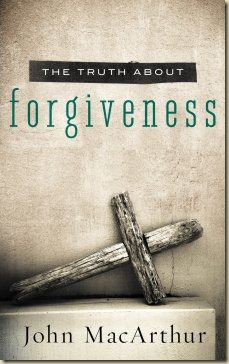
Book Review: “The Truth About Forgiveness”

Cover Image

When I picked up this book for the first time, I was mostly expecting a 100+ page lecture on forgiving other people. But the very first chapter made it clear John MacArthur’s main focus was not going to be someone else’s sin and our responsibility as Christians to love them anyway; he instead chose to target humanity’s sin and our desperate need for Divine grace. As he aptly points out, however, modern psychology has done a great disservice to our culture by ascribing to almost every sin a “scientific” explanation. Murderers, rapists, drug addicts, thieves and liars are no longer pointed to the cross; instead, their actions and addiction are often explained as some kind of social disorder, which then erases any guilt or sense of responsibility that may otherwise lead them to repentance.

Once a solid foundation is laid in support of our need to be forgiven, MacArthur explains God’s willingness to forgive and exactly how He is able to do this justly (“The Necessity of Atonement”). He did get a little distracted for a few paragraphs by predestination, but for the most part he kept everything short, sweet, and to the point. He also shares some beautiful insight into the story of the prodigal son, painting a good historical and cultural backdrop that sheds greater light on Christ’s most popular parable.

My biggest problem when reading theology is that most authors think repeating themselves again and again gives their work greater meaning, while I tend to find it redundant and boring. MacArthur, on the other hand, did a great job of condensing the doctrine of forgiveness into a very readable devotional (only 114 pages) that left me hungry for a deeper understanding of God’s forgiveness, not burnt out and ready to study something else. If you’re intrigued by the title, then you’ll probably be just as intrigued by the book itself and should seriously consider picking up a copy of this worthwhile read at your local Christian bookstore.


My Rating: 4/5 Stars


Disclaimer: I received this book free from the publisher in exchange for my honest review. I was not required to write a positive review and all expressed opinions are my own.

Predestination or Free Will?

“Having predestinated us unto the adoption of children by Jesus Christ to Himself, according to the good pleasure of His will,”

-Ephesians 1:5

The sovereignty of God in predestination is really one of the most debated issues among Christians today. On one hand you have those who believe humankind is a slave to the will of God and that each of us essentially are without any choice in the matter of our personal salvation, while on the other hand there are those who would rather not give any consideration whatsoever to what the Bible has to say about individual election. The most common response is to label oneself a Calvinist or Arminian, find a local church with the same message, and do your best to avoid confrontation with those who hold to a different interpretation of Scripture. Sounds a little like politics, doesn’t it?

The most prevalent argument I’ve heard against predestination as a whole is that it’s incredibly unjust on God’s part. And certainly it would be, if the mind of God was as limited as human intelligence. If without any knowledge of the future the Lord sat in heaven and randomly chose names out of a hat, awarding those lucky few the assurance of eternal life in heaven while damning all others to an eternity of torment in hell without any hope of redemption, predestination would indeed be the epitome of prejudice and injustice. But this is not the case. God is altogether beyond time (Ps. 90:2) and His wisdom and knowledge are infinite in nature.

I say this to point out that, even before the foundation of the world, Jesus Christ was fully aware of the impending fall of man. In eternity past His plan of salvation was already in place, insomuch that He was even then aware of what your personal response to the Gospel would be. He knows where you will spend eternity and how many others will follow you there. Nothing escapes our Lord’s awareness, and to portray Him as a nervous onlooker wondering whether or not we’ll “receive Him into our hearts” is to essentially attack His sovereignty.

“And the Spirit and the bride say, Come. And let him that heareth say, Come. And let him that is athirst come. And whosoever will, let him take the water of life freely.”

-Revelation 22:17

But to say none of us have any say in the matter of our salvation is equally as dangerous. If one’s eternity is entirely beyond his control, then why should we invest in outreach ministries or world evangelism? If a choice made by God long before I even existed is the only determining factor of my future, then shouldn’t I enjoy every sinful pleasure this world would offer me and trust that, if I’m lucky enough to be one of God’s chosen, He’ll figure out a way to save me moments before I die? Not only does this view undermine the holiness of God, but it often undermines the individual Christian’s commitment to holiness.

So then what are we supposed to believe? I’m not saying we should find a comfortable middle ground and compromise any facet of the truth, but my own prayer and Bible study has led me to believe there are certain spiritual truths which even the wisest of Christians can never fully comprehend. Knowing from Scripture I have a personal decision to make that will ultimately determine my eternal home, while also understanding that there is a God “Who worketh all things after the counsel of His own will” (Eph. 1:11) seems like a contradiction, but it certainly wouldn’t stand alone as the only paradox in God’s Word. For instance:

  • We’re exalted through humility (Jas. 4:10).
  • Strength is found in weakness (2 Cor. 12:10).
  • Through death to sin we find true life in Christ (1 Pet. 2:24).
  • We’re to be in the world, but not of the world (John 17:15).

Certain things are simply beyond our full understanding and best serve as gentle reminders of God’s omniscience. Predestination and free will were not revealed to us for the purpose of creating church splits and relational discord; they are there to point to our Creator’s infinite wisdom and understanding. Let’s not allow Satan to turn them into stumblingblocks.


Unconditional Love

Graphic1

For the last four weeks I’ve been privileged with a front row seat to the miracle of life. One of my ducks, Dorothy, spent the hottest part of this year so far tending to a nest of eggs laid in late June and she now has three newly-hatched ducklings to show for her patience. What I didn’t realize until I started raising these animals a few years ago is that successfully incubating duck eggs is no small achievement; it takes 28 days of constant nurturing if there is to be any hope of success. More than 20 hours every day are invested in sitting and waiting, with God-given instinct and love as the expectant mother’s only motivation.

This is the perfect picture of unconditional love. Not only can we see the faithfulness of God exemplified in a mother who sacrifices every comfort to give life to her unborn offspring, but we see that same love reciprocated by hatchlings that are comGraphic2pletely dependent upon her continued care and provision. Even when the time comes for them to leave the nest, they will go only where she leads. Their only shelter is in the shadow of her wings and their only comfort in the reassurance of her presence.

“We love him, because He first loved us.”

          -1 John 4:19


Many Christians take great pride in their commitment to God and love for Him, as if they were the pursuer in the greatest love story of all time. Certainly this is not the case. However faithful we may be in our prayer life, our Bible studies, or in any other facet of our walk with God, our goodness pales in comparison to the One who came “to seek and to save that which was lost” (Luke 19:10). We love Him only because He first loved us. We pray only because He prayed, “Neither pray I for these alone, but for them also which shall believe on Me through [the apostles’] words” (John 17:20). We have hope only because our souls have been ransomed by His blood (Hebrews 9:12, 22). As Paul wrote, “For we ourselves also were sometimes foolish, disobedient, deceived…but after that the kindness and love of God our Savior toward man appeared, not by works of righteousness which we have done, but according to His mercy He saved us” (Titus 3:3-5).

There you have it. Regardless of how magnificent a transformation occurred when you were born again in Christ, you can’t take credit for any of it. It’s all God’s work. He’s the Author of our faith, and, as we read in Ephesians 2:8, even such saving faith is a Divine gift. Every good and perfect gift comes from the hand of God (James 1:17), so anything we give Him in return is only our reasonable service (Romans 12:1). May we all learn to give Him our all, not for recognition, but to bring honor to the one who gave His all for us.